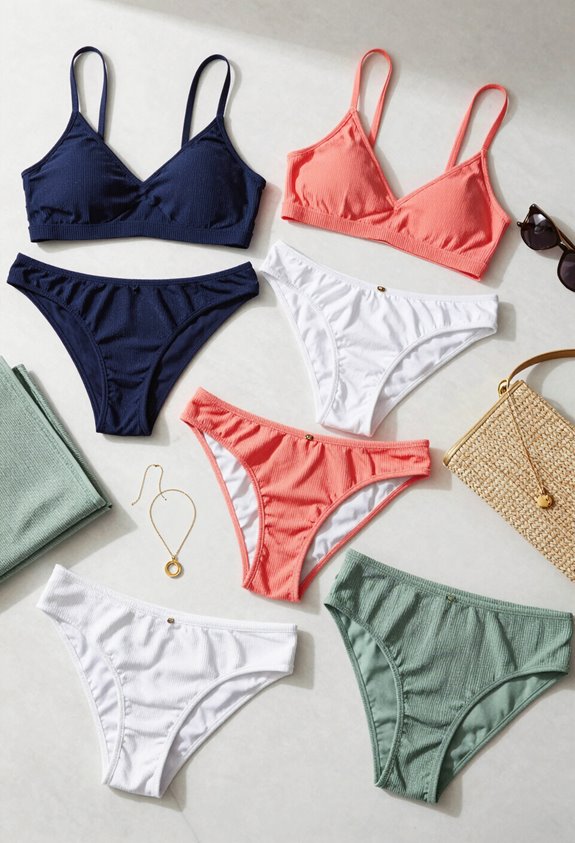


Have you ever stood in front of the mirror, trying on swimsuits, and felt overwhelmed by all the choices? It’s not just about picking a cute design; understanding swimsuit linings can make a huge difference in how you feel while wearing it. Linings offer coverage, comfort, and help your swimsuit last longer.
Plus, when they’re made from materials like nylon or polyester blends, they can stand up to chlorine damage.
Now, let’s talk about some common liner features you might find. Mesh is great for breathability, which is super important on hot days by the pool. If you want a little extra shaping without too much fuss, power mesh is a fantastic option.
And don’t overlook support features. Built-in bras or adjustable straps may seem small, but they can keep everything in place and prevent any wardrobe malfunctions.
So, why does this matter? Choosing the right lining and support can really change your experience in the water. A well-fitted swimsuit minimizes irritation, which means you can focus on enjoying your swim instead of adjusting your suit.
Try this: When you’re shopping, pay attention to the details like the type of lining and support features. Think about what feels comfortable for you.
Truth is, knowing what works for you is key to finding that ideal swimsuit. Keep these tips in mind as you browse, and you’ll be one step closer to finding the perfect fit that makes you feel confident and ready to dive into summer fun!
What’s your biggest swimsuit struggle?
Key Takeaways
- Swimwear linings provide coverage, comfort, and help reduce skin irritation during swimming, extending the lifespan of the swimsuit.
- Different linings, such as nylon-spandex blends and mesh, offer varying levels of support and breathability for different swimwear needs.
- Built-in bras and adjustable straps enhance support and fit, ensuring that swimwear remains secure during movement in the water.
- Comfort features like moisture-wicking, quick-drying fabrics improve overall usability, allowing swimmers to focus on performance without distractions.
- Sustainable options, like recycled polyester and ECONYL, offer durable alternatives while minimizing environmental impact in swimwear production.
Understanding Swimwear Lining: Its Importance and Benefits?
Why is swimsuit lining so important for our swimwear? If you’ve ever felt a bit exposed in a wet swimsuit, you’re not alone. Swimsuit lining plays a crucial role in providing coverage and making sure you’re not flashing anyone when you dive into the pool. It’s also a game-changer for comfort, reducing that annoying irritation that can happen when your skin rubs against the outer fabric.
Durability matters too. A high-quality lining will help your swimsuit hold its shape and look good even after several dips in the water. Common materials like nylon or polyester blends stretch well, support your movements, and resist chlorine damage and UV rays. It’s worth checking the fabric composition before you buy.
If you’re eco-conscious, you might want to look for sustainable options. Materials like recycled polyester or ECONYL® are great choices that don’t sacrifice fit or function. So, why does this matter? Proper opacity and stretch are key. You don’t want to deal with see-through issues or awkward bubbling when you’re trying to enjoy a day at the beach.
Here’s the trick: always opt for swimsuits with good lining if you’re serious about comfort and performance. Many modest swimsuits also feature tummy control technology which complements the lining to enhance fit and confidence. The best part is that with all the options available, it’s easier than ever to find something stylish and functional.
In short, lining in swimwear is not just an afterthought; it’s a fundamental part of making your swimsuit comfy and reliable. What’s your number one must-have when it comes to swimwear?
Types of Swimwear Linings: Exploring Your Options

Choosing the right lining for your swimsuit can feel overwhelming. With so many options out there, it’s important to find one that fits your needs. If you’re into fashion swimwear or bikinis, you might want to check out nylon-spandex blends. They’re soft and stretchy, perfect for making you feel comfortable while looking stylish.
For competitive swimmers, polyester-spandex linings are a solid choice. These fabrics are tough and maintain their shape really well, which is crucial when you’re battling chlorine and UV rays all summer long. Ever wondered why some suits feel so much better in the water? It often comes down to the lining!
If you’re looking for breathability, explore mesh linings made from lightweight polyester or nylon. They provide subtle support and are particularly good for athletic suits and men’s swim trunks. Plus, they help reduce skin irritation from the outer fabric, which is always a win in my book.
But wait, there’s more! If you’re thinking about sustainability, options like recycled polyester and ECONYL® are worth considering. They perform just as well as traditional materials and support eco-friendly practices—what’s not to love about that?
In short, the right lining can really enhance your swimsuit experience. Remember to think about what you’ll be doing in the water and how you want to feel. Considering the comfort and flexibility of fabric blends is key when selecting the best lining for your needs. What type of swimwear lining suits your style?
How Swimwear Lining Boosts Comfort and Performance

Have you ever slipped into a swimsuit that just doesn’t feel right? Whether you’re lounging poolside or tearing through waves at the beach, a well-designed swimsuit can make a world of difference when it comes to your comfort and performance.
The lining of your swimsuit plays a key role in this. A smooth lining feels great against your skin and reduces irritation and chafing as you move. Opt for high-quality materials, like nylon-spandex blends, which give you that wonderful stretch and support. This snug fit not only keeps everything in place but also ensures you don’t have to worry about transparency when you dive into the water.
Breathable, moisture-wicking linings are another must-have. They dry quickly, keeping you comfortable and ready for your next splash. Plus, the right lining can protect the outer fabric, which means your swimsuit lasts longer and continues to look good. Honestly, investing in a good lining is about getting the most out of your swimsuit.
So, why does this matter? It goes beyond just looking good. When you feel comfortable in your swimsuit, you can focus on enjoying your swim instead of adjusting or worrying about your outfit.
To wrap it up, a thoughtfully designed swimsuit lining significantly boosts your swimming experience. You’ll not only feel better in the water but also enjoy those moments without a second thought. Next time you shop for swimwear, keep these tips in mind. What comfort factors do you consider most important when choosing a swimsuit? Also, consider fabrics with supportive features like built-in bras and tummy control to enhance both fit and confidence.
Choosing the Right Support Features in Swimwear
Have you ever put on a swimsuit and felt like it just wasn’t right? Finding the perfect support features in swimwear can really make a difference in how you experience the water.
Power mesh lining is one feature worth considering. It provides a gentle shaping effect, particularly around your bust and waist, giving you that comfortable fit we all crave. Built-in bras can also be a lifesaver, especially those with underwire or padding. They offer targeted support to help you feel more secure, whether you’re swimming laps or just soaking up the sun. And let’s not forget about adjustable straps. They allow you to customize how tight or loose the suit feels, which can help prevent slippage or chafing when you’re on the move.
When you’re trying on swimsuits, pay attention to those designs like higher necklines or racerbacks. They can really enhance your comfort and help you avoid that annoying feeling of things digging in while you’re swimming. So, why does choosing the right fit matter? It can give you the confidence to swim freely without constantly adjusting your suit.
Also, think about the materials. You want swimwear that stands the test of time. Look for durability and chlorine resistance so that your suit holds up and keeps you feeling good for many beach days to come.
In addition, selecting swimwear with moisture-wicking capabilities can improve your comfort and performance in and out of the water.
In short, the right support features can really enhance your time in the water. What support features do you think are a must for your perfect swimsuit?
Essential Features of Quality Swimwear Lining
When it comes to choosing the right swimwear lining, it’s essential to consider a few key features to keep your swim sessions comfortable and functional. You want swimwear made from durable fabrics—think polyester-spandex blends. These materials provide both chlorine resistance and UV protection, which helps your swimsuit last longer.
Stretch is another important factor. You’ll want your swimwear to fit snugly without feeling restrictive, so look for around 10-20% spandex content. That way, you can move freely without worrying about your suit holding you back.
Have you ever experienced a swimsuit becoming transparent when wet? It’s not a fun situation! Adequate opacity is crucial here. A good lining will provide coverage and keep you feeling confident while you swim. Additionally, effective moisture management is something to keep in mind; linings should be quick-drying and breathable for maximum comfort.
And let’s not forget about skin comfort. High-quality linings are designed to help prevent chafing and irritation, which means you can focus on enjoying the water instead of fussing with discomfort. Many maternity swimsuits also incorporate moisture-wicking properties to enhance comfort in warmer weather.
Common Swimwear Lining Issues and Solutions
Have you ever put on your favorite swimsuit only to notice it’s a bit see-through when wet? You’re not alone! It’s a common issue that many faces with swimwear linings. Usually, this happens because the fabric just doesn’t provide enough opacity. To avoid this, opt for high-opacity fabrics. These can really help ensure you feel comfortable and secure while enjoying your time in the water.
Another frustrating problem can be wrinkling. It often pops up when the outer fabric and lining have different stretch properties. The solution? Make sure to test them together during production. It’s a simple step that can save you a lot of hassle later on.
Now, let’s talk about shadow lines. If you’ve noticed them on your swimsuit, it might be time to consider a lining that matches the outer fabric’s color better. A little color harmony goes a long way in keeping your swimsuit looking flawless!
What about those annoying rolling edges? They can ruin an otherwise perfect fit. Paying close attention to finishing techniques and how you align things during production can be key here. And if you see some wavy seams, it’s a good idea to check the machine settings. Regular quality checks can help maintain everything running smoothly.
So, why does this matter? By anticipating these common problems and knowing how to address them, you can ensure your swimwear not only looks great but also supports you well while swimming. Choosing swimsuits with high-quality fabrics ensures durability and better performance during water activities.
Sustainable Swimwear Linings: Eco-Friendly Options
Swimwear linings can be a bit of a hidden gem when it comes to eco-friendliness. Have you ever thought about what your swimsuit is really made of? The good news is, many brands are stepping up their game by using sustainable materials that are both good for the planet and perform like a dream.
For instance, swimwear linings made from recycled polyester significantly cut down on landfill waste. They work just as well as traditional virgin polyester, but with a much smaller environmental footprint. Then there’s ECONYL, which is created from regenerated nylon. This material may not sound familiar, but it stands up to regular nylon in terms of stretch and durability, helping you stay comfortable while you’re basking on the beach or catching waves.
So, why does this matter? The fashion industry has a big impact on our environment, and choosing swimsuits with these eco-friendly linings can make a difference. When you opt for swimwear with sustainable materials, you’re supporting an important shift towards responsible fashion. Plus, many of these swimsuits boast features like moisture-wicking and quick-drying capabilities. Sounds convenient, right?
If you’re on the lookout for a new swimsuit, keep an eye out for those sustainable choices. By picking durable fabrics and conscious designs, you’re not just investing in a piece of clothing; you’re also joining the growing eco-conscious movement. Many popular bikini sets, such as those with quick-drying properties, combine style with functional sustainable fabrics to enhance comfort and practicality.
Care Tips for Maintaining Swimwear Lining Quality
We all love a good day at the beach or pool, but what happens to our swimwear after a few uses? If you’ve noticed your favorite swimsuit starting to look a bit worse for wear, it might be time to pay attention to how you’re caring for it. Keeping your swimwear linings in top shape isn’t just about aesthetics; it also extends the life of that beloved suit.
First up, the golden rule: rinse your swimwear right after you get out of the water. This simple step removes chlorine, salt, and sunscreen that can wreak havoc on the lining fabric over time. Think of it as giving your suit a refreshing shower; it deserves that little bit of extra care.
Next, try this: hand wash your swimsuit with a gentle detergent. This helps avoid the harsh chemicals that can damage your swimwear. Believe me, fabric softeners are a no-go; they can really mess with the elasticity of the lining. While a washing machine might seem like a quick fix, your suit will thank you later for the more delicate approach.
When it comes to drying, here’s the trick: lay your swimwear flat in a cool, dry spot instead of just throwing it in the sun. Direct sunlight can fade colors and break down the fabric, which is the last thing you want. Air drying keeps everything looking fresh and intact.
Now that you’ve cleaned and dried your swimsuits, think about how you store them. Flat is best. Keep them out of direct light to protect both color and lining quality. Plus, storing them flat avoids creases that can weaken the fabric over time. Seems easy enough, right?
Honestly, taking just a few extra minutes to care for your swimwear can make a huge difference in how long it lasts. So why not give your favorite suit the love it deserves? With these tips, you can keep your swimwear looking fantastic season after season. What’s your go-to trick for maintaining your swimwear? Remember that fabrics with chlorine resistance help preserve suit integrity over time, making them a smart choice for longevity.
Frequently Asked Questions
Can Swimsuit Linings Affect Body Temperature in Water?
Swimsuit linings can indeed affect body temperature in water. Their thermal insulation, moisture wicking, and fabric breathability contribute to temperature regulation. Plus, layering effects and color impact play a role in our comfort and performance.
How Can I Tell if a Swimsuit Has Quality Lining?
We can tell a swimsuit has quality lining by checking its fabric for durability, comfort levels, and elasticity retention, along with moisture wicking, UV protection, colorfast materials, and how well it maintains fit consistency.
Are Layered Linings Better for Support or Comfort?
Layered linings aren’t just about support; they’ll wow you with comfort levels too! Different fabric thicknesses and lining materials cater to body shape, ensuring fit adjustments match style preferences and longevity factors across brand comparisons meet industry standards.
What Materials Are Commonly Used in Swimsuit Linings?
We often find swimsuit linings made from nylon blends, polyester fabric, and spandex stretch. Neoprene lining, mesh panels, cotton lining, and quick dry materials with UV protection and seamless construction are common, including eco-friendly options.
How Do Swimsuit Support Features Vary by Activity?
Swimsuit support features really vary by activity. Competitive swimsuits emphasize swim racing technology, while leisure swim features cater to casual beachwear. Each design, from water aerobics to surf attire, meets specific activity needs effectively.